Introduction: why the 3-Day Desert Tour from Marrakech to Erg Chigaga is Morocco’s wild Sahara classic
The 3-Day Desert Tour from Marrakech to Erg Chigaga is one of the best choices for travelers who want a true “off-the-beaten-path” Sahara experience without adding extra days. In only three days, you cross the High Atlas Mountains, explore UNESCO heritage, and then head deep into the south for a desert adventure that feels raw, spacious, and authentic. Because Erg Chigaga is reached by a long off-road section, it delivers a more remote desert mood than many standard routes, which is exactly why it attracts travelers who prefer nature, silence, and big landscapes over crowded highlights.
At the same time, this is not a fixed bus-style itinerary. It is a private or flexible-format journey where timing can match your pace, your comfort, and your photo priorities. Whether you are traveling as a couple, a family, or a group of friends, this Marrakech to Erg Chigaga tour can include more viewpoints, slower meals, and better sunset positioning in the dunes. In other words, it works perfectly as part of a Morocco Atlas mountains & Desert tour style trip, especially for travelers who want a Sahara story that feels personal rather than rushed.

Erg Chigaga vs Erg Chebbi: why Chigaga feels wilder
Many travelers know Erg Chebbi near Merzouga, yet Erg Chigaga offers a different kind of Sahara. While Chebbi is iconic and accessible, Chigaga is more remote, and the off-road approach makes it feel like a real expedition. Because there are fewer large groups and fewer built-up areas, the atmosphere is often quieter and more “desert-first.” Therefore, the journey itself becomes part of the adventure, not just a means to reach the dunes.
Additionally, choosing Chigaga is often about travel style. If you love remote landscapes, long horizon lines, and fewer crowds, Chigaga can be a perfect match. On the other hand, if you prefer maximum comfort and quick access, Merzouga may feel easier. Consequently, it’s smart to compare this route with options like the 4-Day Desert Tour from Marrakech to Erg Chebbi or the 3-Day Desert Tour from Marrakech to Merzouga, and then choose the desert that fits your pace and expectations.
Who this tour is best for (private travelers, families, and small groups)
This itinerary is ideal for travelers who want an authentic Sahara experience but still need a clear structure and comfortable pacing. Couples often choose it for the romance of sunset dunes and private camp evenings, while families appreciate having a private vehicle and the ability to take breaks when needed. Because the route includes long drives and off-road travel, comfort-focused planning matters, and that is easier when you book a private version or a very small group format.
In addition, this tour is a strong fit for guests who prefer flexible travel rather than strict timing. You can slow down at Ait Ben Haddou, adjust lunch locations, and prioritize photography stops in the Draa Valley or on the dunes. Therefore, this route can complement longer itineraries such as a 10-Day Imperial Morocco Tour or Morocco Itinerary 10 Days from Casablanca, especially if you want your desert chapter to feel more remote than standard Merzouga routes.
Route overview: Marrakech → Zagora → Erg Chigaga → Marrakech
The classic route begins in Marrakech, crosses the High Atlas via Tizi n’Tichka, and then enters the kasbah landscapes of the south. You visit Ait Ben Haddou, pass Ouarzazate, and then follow the Draa Valley palm groves to reach Zagora for the first night. On Day 2, you explore Tamgroute and Mhamid, then switch from paved road to off-road tracks through stones, sand, and oases until you arrive at Erg Chigaga near sunset.
Finally, Day 3 begins with sunrise on the dunes and continues with a spectacular off-road return via Lake Iriki, fossil beds, and the Jebel Bani landscapes before reaching Foum Zguid and Taznakht. Because the route blends mountains, valleys, kasbahs, off-road desert, and dunes, it is one of the most complete short-format Sahara adventures from Marrakech. As a result, it often appeals to travelers who want “maximum Morocco” in a short time, without losing authenticity.

Day 1: Marrakech – Telouet – Ait Ben Haddou – Draa Valley – Zagora
Day 1 starts around 8:00 a.m. with pickup from your hotel or riad in Marrakech, followed by a scenic climb into the High Atlas Mountains. The drive over Tizi n’Tichka includes panoramic viewpoints over Berber villages and mountain landscapes, so short photo stops and breaks are usually part of the rhythm. After the pass, you continue toward the Ounila Valley route, which is a beautiful, less rushed approach toward Ait Ben Haddou and the kasbah region.
Later, you arrive at Ait Ben Haddou for lunch and a visit to the UNESCO-listed mud-brick ksar. Afterward, you pass Ouarzazate (often called “Moroccan Hollywood”) and then head south into the Draa Valley, famous for palm groves, oases, and old kasbah silhouettes. By evening, you reach Zagora—often described as the “door to the desert”—and spend the night in a guesthouse in the palm grove with dinner included.
Ait Ben Haddou (UNESCO): how to enjoy the kasbah stop properly
Ait Ben Haddou is one of the most iconic kasbah sites in Morocco, and it deserves more than a fast photo stop. The best experience comes from walking the pathways slowly, noticing the textures of the clay architecture, and reaching viewpoints that look back over the valley. Because it can be busy at peak hours, arriving with good timing and enough walking time improves the visit significantly.
Additionally, Ait Ben Haddou is a strong “story stop” in this itinerary because it connects mountain travel to desert travel through Morocco’s historic trade-route heritage. It also helps travelers understand why southern Morocco is filled with kasbah landscapes and fortified villages. Therefore, spending time here adds cultural depth to the tour, and it keeps Day 1 from feeling like “only driving,” even though it is a long scenic day.
The Draa Valley: palm groves, oases, and kasbah scenery
The Draa Valley is one of Morocco’s most impressive oasis corridors, with long stretches of palm trees, agriculture, and kasbah silhouettes that appear like mirages between greenery and desert tones. Driving through this region feels atmospheric, especially in late afternoon light when shadows grow longer and the valley looks warmer. Because this landscape is less “tourist-staged” than some headline stops, it often feels more authentic and lived-in.
Moreover, the Draa Valley creates the emotional transition into the desert. You move from mountains to kasbah architecture to oasis scenery, and then finally to deeper desert zones on Day 2. As a result, travelers who love scenery and photography often say the Draa Valley is one of the hidden highlights of the tour, not just a route segment on the way to dunes.
Night 1 in Zagora: what to expect and how to prepare
Overnight in Zagora is usually in a guesthouse inside or near the palm grove, which creates a calmer atmosphere than a city hotel. The evening is typically relaxed: dinner, tea, and time to rest after the first long day. Because you still have a big off-road day ahead, sleeping well and keeping the evening low-stress helps you enjoy the next day’s adventure more fully.
In addition, Zagora’s role is practical as well as cultural. It breaks the distance between Marrakech and Erg Chigaga into manageable parts, which keeps the tour comfortable. Therefore, even though the dunes are the “headline,” the first night sets the pace and energy level of the entire experience, especially for families and travelers who want to avoid an exhausting schedule.
Day 2: Zagora – Tamgroute – Mhamid – Erg Chigaga dunes
After breakfast, Day 2 often begins with a short walk in the palm grove and oasis areas before visiting the Kasbah of Amzerou in the Jewish quarter. You then continue to Tamgroute, a village known for its cultural heritage, including the Quranic school and library, the underground kasbah, and traditional green pottery workshops. Because these cultural stops are unique to the region, they add authenticity and variety before the desert off-road section begins.
Later, lunch is usually in Mhamid, either at a restaurant or as a picnic organized by your driver, depending on your preference and the schedule. After Mhamid, you leave the paved road and switch to off-road driving through rocky tracks, sand, and oases for roughly two hours. Arriving near sunset, you reach Erg Chigaga and then trade the vehicle for camels for a sunset trek, ending the day at a desert camp with dinner, campfire drumming, and Berber music.
Tamgroute: why this cultural stop matters
Tamgroute is more than a quick visit; it is one of the strongest “culture moments” on the Chigaga route. The Quranic library and traditional learning spaces highlight the region’s historical depth, while the underground kasbah adds a unique architectural perspective that many travelers have never seen before. Because the desert can sometimes feel “only landscapes,” Tamgroute adds human history and local identity to the story.
Additionally, the green pottery workshops are memorable because they show living craft traditions rather than museum displays. Watching artisans at work helps travelers feel connected to real daily life in the south. Therefore, Tamgroute is an excellent stop for guests who care about meaningful cultural discovery, not just dunes and photos.
Mhamid to Erg Chigaga: the off-road adventure section
The off-road drive from Mhamid toward Erg Chigaga is a defining feature of this itinerary. Instead of following a simple paved route, you travel through a changing terrain that feels more like a desert expedition: stone “rivers,” sandy tracks, and oasis stops where the landscape shifts unexpectedly. Because this segment is remote and open, it often becomes one of the most exciting parts of the trip for adventure travelers.
At the same time, comfort and safety depend on a professional driver and a well-maintained vehicle. Off-road time can be bumpy, so it helps to keep water available and to take short breaks if needed. Consequently, this part of the tour is best enjoyed when you treat it as an experience in itself—an adventurous transition that makes arrival at Erg Chigaga feel truly earned.
Sunset camel trekking in Erg Chigaga: the signature moment
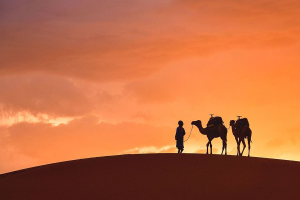
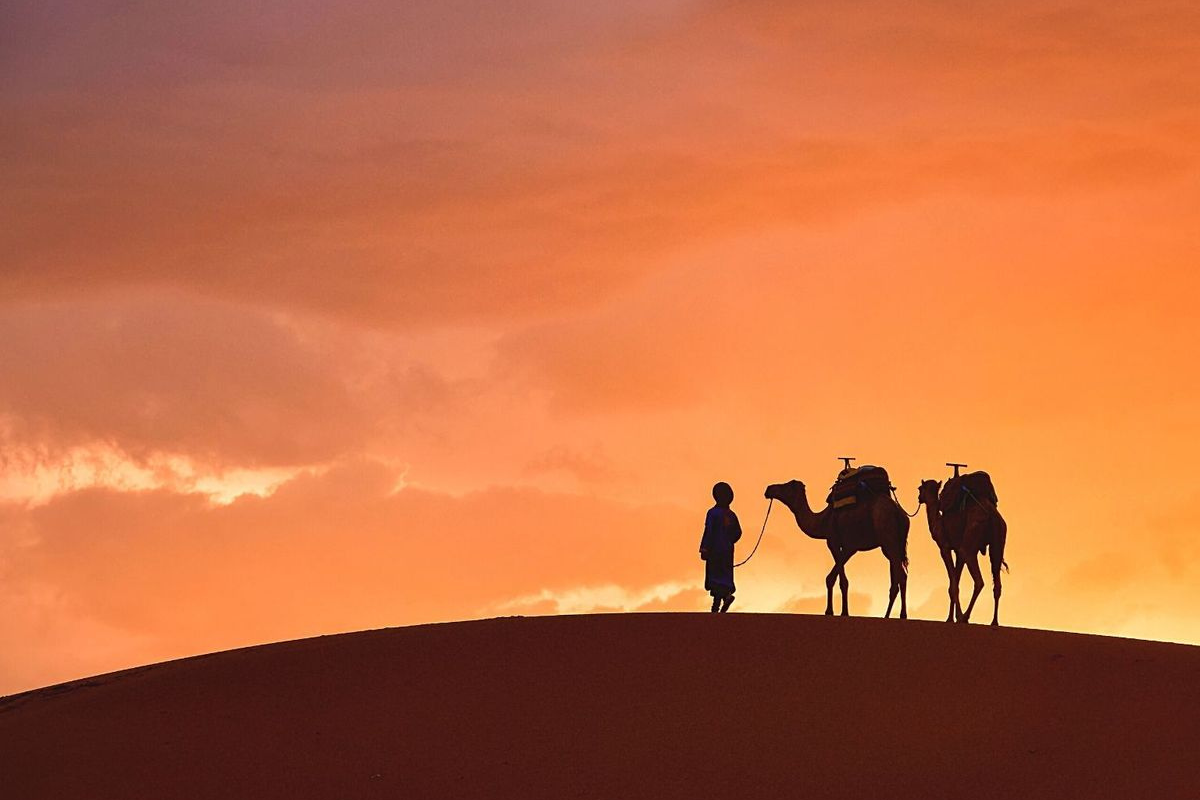
Arriving at Erg Chigaga before sunset is the emotional peak of Day 2. As you trade the vehicle for camels, the dunes begin to glow, and the sky often shifts into warm tones that make photos look dramatic and rich. The camel trek typically lasts about an hour, giving you enough time to feel the desert rhythm and to enjoy the silence that makes the Sahara so powerful.
Moreover, sunset is the best moment for dune color and texture, especially when the sand turns red-gold under angled light. Because Erg Chigaga is less crowded than many dune areas, the experience often feels quieter and more private. As a result, the sunset trek becomes the memory most travelers describe first when they look back on this Marrakech to Erg Chigaga adventure.
Desert camp night: private tents, dinner, and Berber music
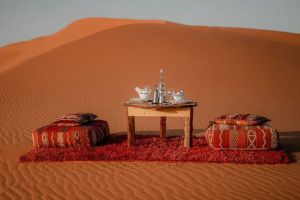
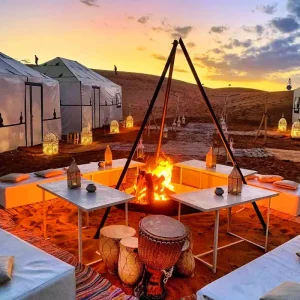
After the camel trek, you arrive at camp, check into your tent, and settle into the desert atmosphere. Dinner is usually served under the stars, and the evening often continues with campfire drumming and Berber music, which creates a warm, social mood without feeling forced. Because the desert sky has low light pollution, the stars can look incredibly bright, especially on moonless nights.
In addition, comfort level depends on the camp category. Many travelers choose private tents for privacy and better sleep, while others upgrade to more comfortable or luxury-style setups when available. Therefore, if you are planning a special trip or traveling as a family, it is worth confirming camp details in advance—especially bedding quality and bathroom arrangements—so the night feels relaxing, not stressful.
Day 3: Erg Chigaga – Lake Iriki – Foum Zguid – Marrakech
Day 3 begins with sunrise on the dunes, which is often quieter and more peaceful than sunset. Watching the sky brighten from the top of a dune is a powerful moment, especially as sand colors change with the first light. After breakfast, you head north-west toward Foum Zguid with about three hours of off-road driving, including scenic stops along the way in remote desert landscapes.
On the route, you stop at Lake Iriki, a surprisingly dry lake bed that creates an otherworldly open space, then continue to fossil areas where a short “fossil hunt” can be a fun break. You also drive along Jebel Bani ridges and through acacia groves before reaching paved roads again near Foum Zguid. After a break in the village, you continue toward Taznakht for lunch and optional cooperative visits, then cross the Atlas and arrive back in Marrakech around 6:00 p.m.
Lake Iriki and fossil beds: what makes this section unique
Lake Iriki is one of the most unusual sights on this itinerary because it looks like a lake on maps, yet it is often dry, forming a massive open plain. The emptiness and scale create a powerful sense of isolation that feels deeply Sahara-like. Because it is not a typical tourist stop, it often feels like you are seeing something “hidden” that most travelers miss entirely.
Additionally, fossil beds add a playful and educational layer to the route. Even a short stop can be memorable if you enjoy natural history and the idea of ancient sea life preserved in desert stone. Therefore, this part of Day 3 strengthens the feeling that the Chigaga route is an expedition-style journey, not only a dunes visit.
Taznakht and carpet cooperatives: optional cultural add-on
Taznakht is known for weaving traditions, and some itineraries include an optional visit to women’s cooperatives where carpet-making is explained. For travelers who enjoy crafts and cultural learning, this can be a meaningful stop that supports local communities. Because it is optional, you can choose based on your interest level and time, which helps keep the day flexible.
Moreover, adding a cooperative stop can make your return day feel less like “only transport.” It breaks the drive with culture and gives you a tangible connection to regional craft identity. Consequently, even if you do not shop, seeing weaving processes can add depth and human connection to the overall Morocco story you experienced across three days.

What’s included (typical) and what to confirm before booking
Most private versions of this itinerary include hotel pickup and drop-off in Marrakech, a comfortable private vehicle with a professional driver, accommodation for two nights (guesthouse + desert camp), and dinners and breakfasts. Many tours also include the camel trek at Erg Chigaga and camp entertainment such as music around the fire. Because operators vary, it is important to confirm exactly which meals are included and what camp facilities you should expect.
In addition, ask about details that affect comfort: private tent options, bathroom type, and whether the off-road portion is done fully by 4×4. Also confirm whether entrance fees, local guides at specific sites, and lunch costs are included or separate. Therefore, a quick checklist conversation before booking can protect your experience and ensure the tour matches your expectations in both comfort and authenticity.
Best time to do this tour (season-by-season comfort)
Spring and autumn are usually the best seasons for the Marrakech to Erg Chigaga route because temperatures are comfortable for both driving and dune activities. During these months, sunrise and sunset are pleasant, and the off-road sections are usually more enjoyable without extreme heat. Therefore, if you can choose dates freely, these seasons often deliver the best balance of comfort and clear skies.
However, summer can be very hot in southern Morocco, so early starts, hydration, and shade breaks become more important. Winter can be beautiful but cold at night in the desert, so warm layers are essential for camp stays. Consequently, choosing the right season is one of the easiest ways to upgrade your experience without changing the route at all.
How this tour connects to other popular Morocco itineraries (keywords included)
Many travelers do not book this route in isolation; they connect it to broader itineraries across Morocco. If you start in Casablanca, you might begin with a Casablanca City Tour or Casablanca Half Day City Tour, and you may search for Top Things to Do in Casablanca and What to see in Casablanca before heading south. Likewise, longer plans such as 10 days tour from casablanca, 10 Day Morocco Tour From Casablanca, 10-Day Imperial Morocco Tour, and Morocco Highlights From Casablanca – 10 days can include Marrakech as a base before the Erg Chigaga section.
Similarly, week-long plans like Morocco One-Week Itinerary, Morocco Itinerary 7 Days from Casablanca, 7 days Tour from Casablanca, 7 Days Morocco Tour from Casablanca, Casablanca to Marrakesh – 7 Days, and 7 Days Desert Tour From Casablanca To Marrakech often end in Marrakech, which makes it easy to add this off-road desert route. If you are comparing alternatives, you might also review the 3-Day Desert Tour from Marrakech to Merzouga, Marrakech to Merzouga 3 Days, or a cross-country route like 3-Day Desert Tour from Marrakech to Fes or Marrakech to Fes 3 Days. For travelers wanting more time, longer options include the 4-Day Desert Tour from Marrakech to Erg Chigaga, 5-Day Desert Tour from Marrakech to Fes, or 5 Days tour from Marrakech, depending on pace and endpoints.
Conclusion: is the 3-Day Desert Tour from Marrakech to Erg Chigaga worth it?
Yes—especially if you want a wilder Sahara feeling than more accessible dune routes. The 3-Day Desert Tour from Marrakech to Erg Chigaga delivers mountains, UNESCO heritage, oasis valleys, off-road adventure, camel trekking at sunset, and a memorable camp night under stars. Because the itinerary is designed as a loop back to Marrakech, it works well for travelers who want a complete desert experience without changing flights or city endpoints.
Ultimately, the best version of this trip depends on your comfort style and pacing preferences. If you want maximum flexibility and better timing for photos, choose a private format and confirm camp details early. If you want a slower rhythm, consider upgrading to 4 days. Either way, this route remains one of the strongest choices for travelers seeking a true Morocco Atlas mountains & Desert tour that feels adventurous, authentic, and unforgettable.
Tours from Marrakech
2-Day Desert Tour from Marrakech to Zagora
3-Day Desert Tour from Marrakech to Merzouga
3-Day Desert Tour from Marrakech to Fes
4-Day Desert Tour from Marrakech to Erg Chigaga