A clear road from the red city to the dunes
A 4-day desert tour from Marrakech to Fes is one of the most direct ways to watch Morocco change shape. You start in a busy historic city, climb the High Atlas, pass fortified villages and palm valleys, and reach the golden dunes of Erg Chebbi before the road turns north to Fes. The point is not to collect every landmark in the country. The point is to follow one strong line of landscapes and let each day lead naturally into the next.
Because the route is well known, it is also easy to picture before you book. Marrakech gives you the lively start. Ait Ben Haddou and the south-eastern valleys give you architecture and dramatic rock. Merzouga gives you the Sahara horizon. Fes gives you a deep medina at the end, so the journey finishes in a city rather than on a long return to the same hotel. For many travelers, that one-way design is the main reason this tour feels complete.
What this four-day journey is meant to do
During this Marrakech to Fes desert tour, the essential stops are Ait Ben Haddou, the Ouarzazate region, the Dades Valley, Todra Gorge, and the Erg Chebbi dunes at Merzouga. One highlight is a camel trek timed for sunset, followed by a night in a desert camp. Another is the slower cultural thread: village roads, tea stops, and time with Amazigh, or Berber, communities whose towns have shaped this corridor for centuries.
In addition, the last stretch matters as much as the dunes. After Merzouga, the usual road north runs through the Ziz Valley and the cedar country of the Middle Atlas before Fes. You should still treat the day-by-day overnight plan as a pattern, not a promise. Drivers adjust for weather, roadworks, group pace, and the exact camp. Even so, the meaning of the trip stays the same: mountains, kasbahs, gorges, Sahara, then an imperial city.
Why travelers choose Marrakech as the start and Fes as the end
Marrakech is a practical place to begin because many international flights land nearby, and the city is already on most first-time itineraries. Leaving from there also makes the High Atlas crossing feel like a real departure. By the time you reach the desert, the noise of the medina is far behind you. Ending in Fes then saves a long backtrack across the same mountain road.
However, this shape is not ideal for every schedule. If you must sleep in Marrakech on the last night, a return tour toward Erg Chebbi or Erg Chigaga may fit better. If you have a full week and want the coast as well, a longer plan from Casablanca can carry the same desert ideas without squeezing them into four days. Therefore, think of this route as the best match when you want the classic south-east crossing and you are happy to change cities.
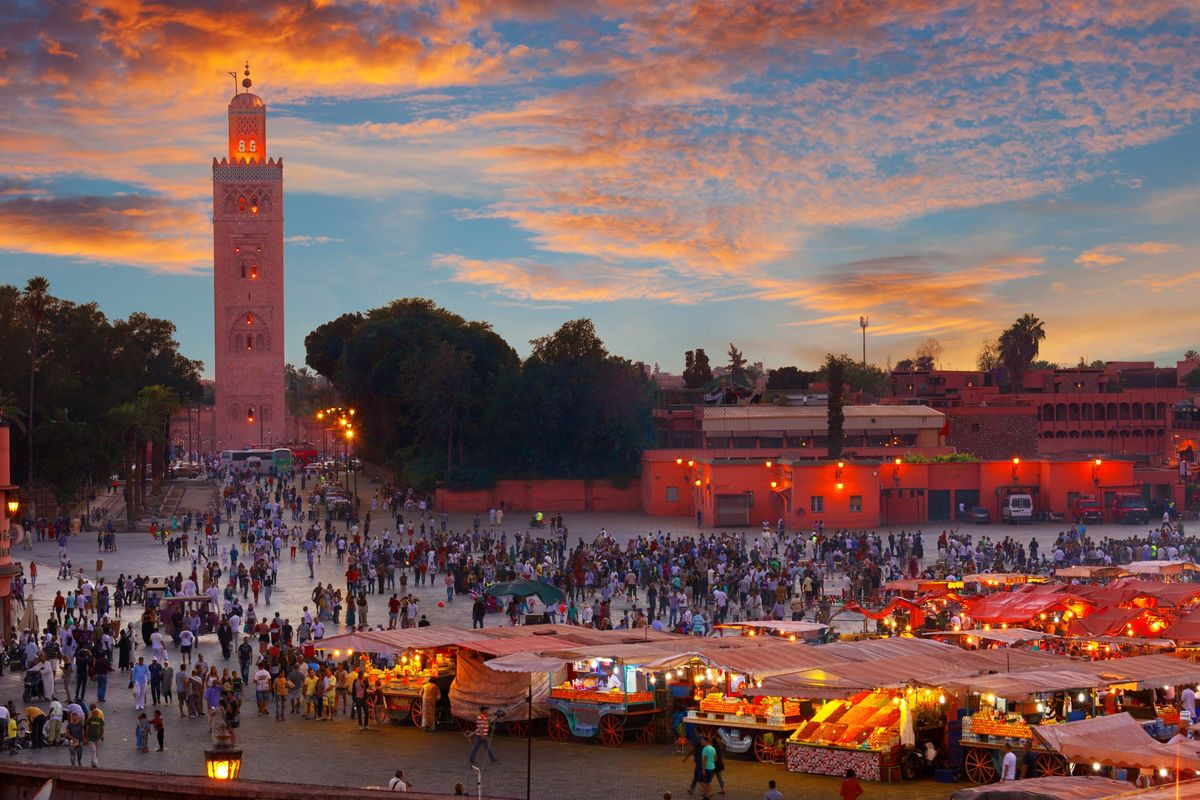
Tours from Marrakech:
Day one: over the High Atlas toward kasbah country
The first day usually leaves Marrakech in the morning and climbs toward Tizi n’Tichka, the high pass that links the Atlantic-facing side of the mountains with the drier south. The road is scenic and winding, so the pleasure is in the viewpoints rather than in speed. Villages, terraces, and roadside stalls appear and disappear as the altitude changes. On clear days the scale of the High Atlas is the memory people keep, even before they reach the famous kasbah.
After the pass, the land opens and the architecture changes. Most versions of the tour stop at Ait Ben Haddou, then continue to Ouarzazate or a nearby valley for the night. Some add a short detour when time allows, but the core remains the mountain crossing plus the first great kasbah. As a result, day one feels full without trying to reach the Sahara too soon. That restraint is useful, because the dune night is stronger when you arrive rested.
Ait Ben Haddou, seen as a living place rather than a backdrop
Ait Ben Haddou is the architectural highlight of the opening day. The ksar rises above the riverbed in packed earth, with towers and lanes that explain, almost at a glance, why caravan routes needed defended villages. Walking up through the settlement is the right way to understand it. From the upper slopes you can look back across the valley and see how water, fields, and walls belonged together.
At the same time, it is still a place with residents, vendors, and visitors, not an empty film set. Go early if you can, wear shoes that can handle uneven ground, and ask before photographing people. Guides often explain which parts are restored and which remain private. In other words, the stop works best when you give it time. A rushed photo from the parking area misses the reason this kasbah anchors so many Morocco Atlas mountains and desert tours.
Ouarzazate and the road that turns toward the valleys
Ouarzazate is less famous than the dunes, yet it helps the route make sense. The town sits at a crossroads between the mountains, the Draa side of the country, and the valleys that lead east. Travelers often pause for lunch, a view of the kasbah, or a short look at the film industry that grew up in this light. None of that needs to dominate the day.
Meanwhile, the evening is for settling into the slower rhythm of the south. Distances on a map look modest until mountain roads and photo stops stretch them. A good operator will say clearly whether night one is in Ouarzazate, Skoura, or farther along the Dades side. For this reason, read the overnight towns before you compare prices. Two tours can share the same title and still feel very different after dark.
Day two: palm valleys, roses in season, and the Dades
The second day is usually the long scenic drive toward the desert edge. Depending on the season, the road may pass the Valley of Roses around Kalaat M’Gouna, which is fragrant and busy in spring and much quieter later in the year. Skoura’s palm grove and the string of kasbahs along the Dades show a different Morocco from Marrakech: mud walls, irrigation, and villages pressed close to water.
Furthermore, the Dades Valley is not only a viewpoint on a cliff. It is a working landscape of farms, gorges, and small hotels tucked under rock. Walking even a short way above the road makes the shapes clearer. If your tour includes a night here rather than pushing all the way to Merzouga, you gain a calmer evening and a better chance to see Todra in good light the next morning. Either pattern can be excellent if the driving hours are honest.
Todra Gorge and the narrow world of the canyon
Todra Gorge, also called Todgha, is where the valley walls close in and the sky becomes a strip. The most visited section is easy to reach, and the contrast with the open plateau is immediate. People come for the height of the rock, the cool shade, and the simple pleasure of standing in a passage cut by water. In warmer months the walk beside the riverbed is especially welcome after hours in the car.
On the other hand, the gorge is not a private site. Hotels, stalls, and other vehicles share the entrance, so expectations should stay realistic. A longer walk beyond the busiest bend is often more rewarding than a single photo at the narrowest point. Consequently, ask your driver how much time is planned. Fifteen minutes is a snapshot. An hour lets the place register. That difference matters on a route already rich in famous names.
The approach to Merzouga and Erg Chebbi
After Todra, the country grows wider and drier. Towns such as Erfoud and Rissani mark the shift toward the Sahara fringe, with date palms, ramparts, and market life that still follows the desert calendar. This is a good moment to notice how the tour’s “desert” is not only the dune ridge. It is also the towns that supply the camps and host the people who work the tourist route.
Before long, Erg Chebbi appears as a separate wall of sand on the horizon near Merzouga. The first sight is often the one travelers mention later, because the dunes do not resemble the mountains you have just crossed. They are smoother, taller than they look, and quick to change color. Even if you have seen desert photographs, the scale is hard to judge until you are standing at the edge with the road behind you.
The camel trek and the sunset that organizes the day
The camel trek is the set-piece of the Merzouga section, and it is worth understanding in plain terms. On a standard luxury-camp itinerary, the ride is usually a measured crossing from a meeting point to a nearby camp, not a multi-day caravan. The timing is the luxury. Leaving in the late afternoon means the sand is cooler and the light turns the ridges gold, then pink, then blue.
In particular, comfort depends on small choices. A scarf, sunglasses, and modest clothing help with sun and wind. Listen to the guide when mounting and dismounting, and say early if you need a slower pace or would rather walk part of the way. Camels are working animals, so the best operators keep the distance reasonable. Ultimately, the goal is a quiet arrival and a clear view of sunset, not a race to the farthest dune.
A night in camp, and what “luxury” should mean
Spending the night in camp is what separates this journey from a dune viewpoint at the roadside. Many camps now offer proper beds, blankets, dinner, and a shared or private bathroom, with music after the meal if guests want it. Stars are the other amenity, and they need no decoration. If the sky is clear, the camp’s distance from town lights is part of the experience.
Nevertheless, “luxury” is a wide word in the Sahara. One camp may mean a stylish tent and a hot shower. Another may mean a comfortable bed and a simpler wash block. Ask what is included, whether dinner suits your diet, and how charging, heating, and transfers work. In addition, nights can be cold even after a hot day, especially outside summer. A layer you can add at dinner will do more for your comfort than another adjective in the brochure.
Morning on the dunes, then the turn toward the north
Sunrise is the second gift of a dune night. The sand is marked by wind and footprints, the air is brief and cool, and the crowds of the previous afternoon have not yet returned. Some guests walk a short way out for a view. Others simply watch from camp before breakfast. Either way, the morning makes the overnight feel justified.
After that, the tour leaves the Sahara and starts the long northbound day. This is often the most tiring drive of the trip, so a fair itinerary will include real stops rather than a dash to the Fes city limits. You have already done the main desert work. What remains is the transition: palm valleys, high plains, forest, and finally the walls of an old imperial capital.
The Ziz Valley and the cedar forests of the Middle Atlas
The Ziz Valley is the graceful exit from the south. Palms follow the water, villages sit above the gorge, and the road offers repeated views of a green thread in a dry landscape. It is a useful reminder that the desert edge is inhabited and farmed, not empty. A short stop here resets the day before the higher country begins.
Next, the Middle Atlas changes the temperature and the vegetation. Cedar forest, especially around the Azrou region, feels like another season after Merzouga. Travelers sometimes see Barbary macaques near the road. Watch them, keep food packed away, and do not feed them. Feeding harms the animals and creates aggressive habits. In the end, the forest stop should feel like a calm bridge between dunes and Fes, not a roadside circus.
Arrival in Fes, and how to use the first evening
Fes rewards a traveler who arrives with energy left, but the medina does not require a perfect plan on night one. The old city is dense, historic, and easy to misread if you expect Marrakech’s larger squares. A guided walk the next morning is often the better introduction. On arrival night, a shower, a meal, and a short stroll may be enough.
By comparison, trying to “finish” Fes in the same afternoon you leave the desert usually leads to frustration. Tanneries, workshops, mosques, and neighborhood gates deserve daylight and a guide who can explain what is public and what is private. Therefore, judge the four-day tour as the transfer of your journey into Fes, not as a complete city guide. The city begins properly when the driving stops.
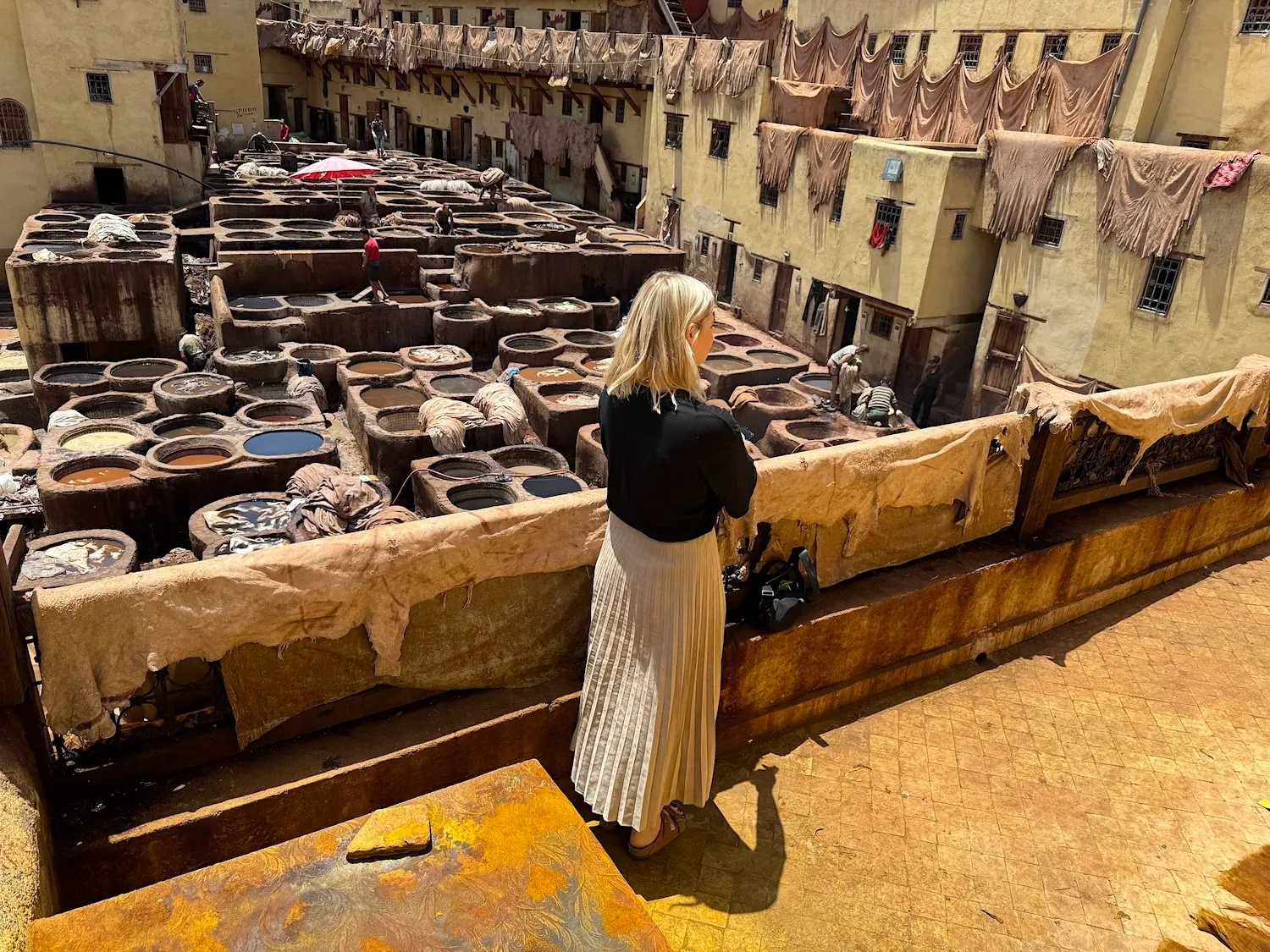
Tours from fes:
3-Day tour from Fes to Marrakech
4-Day Desert Journey from Fes to Marrakech :
5-Day tour from Fes to Marrakech
Amazigh villages and the cultural side of the road
The cultural promise of this tour is real, but it is easy to overstate. You will pass villages, meet hosts and drivers, and likely share tea or a meal prepared for travelers. You may hear music at camp and see how oases organize life around water. These are genuine contacts. They are still contacts inside a tourism economy, so they should be described with care.
Similarly, small choices shape the quality of that contact. Buy crafts when you want them, not because a stop was designed to pressure you. Ask before photos. Learn a greeting. Use the word Amazigh alongside Berber if you want to be precise. Above all, treat culture as something you witness and respect, not as a performance included in the price. That attitude makes the same itinerary feel richer.
Light, landscape, and the kind of photos this road gives you
This route is unusually generous to photographers because the land keeps changing. Morning in the Atlas is different from late light on a kasbah, which is different again from blue hour on a dune. The practical advice is simple: sit on the side of the vehicle with the view when you can, and keep the camera ready during the mountain and gorge sections. Many of the best frames last only a few minutes.
For instance, Erg Chebbi rewards patience more than a single sunset snapshot. Footprints, ripples, and the line where sand meets scrub can be as strong as a wide panorama. In Fes, ask permission around workshops and avoid blocking lanes for a picture. A Morocco Atlas mountains and desert tour is memorable in person first. The photos are better when they follow that order.
Food, tea, and the daily pace between cities
Meals on this road are part of the geography. Breakfast is often bread, olives, eggs, cheese, and jam at a riad or hotel. Lunch may be a tagine near the day’s main stop. Dinner at camp is commonly a shared Moroccan meal, with soup, a main dish, and fruit. Mint tea appears so often that it becomes a kind of punctuation between drives.
At the same time, dietary needs should be arranged before departure. Vegetarian meals are widely possible. Strict requirements, allergies, and alcohol preferences are less consistent from stop to stop. Say what you need when you book, then repeat it on the first morning. Consequently, the tour feels hospitable rather than improvised. The landscape is the spectacle. The food is what makes the long days sustainable.
When to go, and what to pack for four different climates
Season changes the same itinerary more than many visitors expect. Spring and autumn are the easiest balance for walking and driving. Summer can be extremely hot around Merzouga, with dazzling light and hard midday hours. Winter can be beautiful and quiet, but nights in camp and on the Middle Atlas road may be cold, and high passes can be affected by weather. None of these seasons is wrong if your packing and expectations match them.
To begin with, pack layers, a warm top for camp, a scarf, sunscreen, a hat, and shoes you can walk in. A small day bag is more useful than a suitcase you must unpack at every hotel. Bring any personal medicines, since village stops are not pharmacies. In addition, cash still matters for tea, tips, and small purchases, even if larger payments were arranged in advance. Modest clothing makes village visits more comfortable for everyone.
Who enjoys this pace, and who should change it
This four-day version suits travelers who want the classic south-east highlights and can accept several hours of scenic driving. It is a good bridge between two great cities. It also suits people who care more about dunes, gorges, and kasbahs than about beaches or a long list of museums. You do not need special fitness for the standard stops, though dune walks and kasbah steps are easier if you are steady on your feet.
However, it is a poor fit if you dislike long transfer days or need a slow morning every day. Young children, travelers with limited mobility, and anyone sensitive to heat should ask detailed questions before booking. A private vehicle can adjust stops more easily than a full group departure. On the other hand, a group tour can be the simpler and more social choice. The route is flexible. The number of hours in a car is not.
Shorter plans from Marrakech, and why three days changes the feeling
A 3-days tour from Marrakech can still reach extraordinary scenery, but it must leave something out or make the days longer. That is not a flaw if your time is fixed. It is simply the trade. Three days can be enough for a first look at the south, a kasbah, a gorge, and a dune sunset, provided the operator does not pretend the pace will feel leisurely.
By comparison, the four-day Marrakech-to-Fes plan earns its extra day by giving the desert night a proper place and by finishing in a different city. If you only have a weekend plus one day, choose a shorter loop and protect one unhurried stop instead of chasing every famous name. In other words, a smaller route with honest timing is better than a famous route that exists only as a headline.
Three-day choices: Merzouga, Fes, or Erg Chigaga
A 3-day desert tour from Marrakech to Merzouga is usually about getting to Erg Chebbi and back toward Marrakech, or ending after the dune stay if your flights allow. A Marrakech to Merzouga 3 days plan can be memorable, yet the driving share is high. You will see the dunes. You will not have much spare time around them.
A 3-day desert tour from Marrakech to Fes, sometimes written as Marrakech to Fes 3 days, is tighter still, because you are crossing almost the same country as the four-day version with one less night. Choose it only if your dates demand it, and expect a shorter desert pause. A 3-day desert tour from Marrakech to Erg Chigaga points west instead, toward M’Hamid and a more remote dune field. The road character is different, often with a rougher final approach. Therefore, do not treat these three titles as the same tour with different spelling. The direction changes the journey.
Four-day alternatives: Erg Chigaga or Erg Chebbi, then back or onward
A 4-day desert tour from Marrakech to Erg Chigaga gives the western dunes more room than a three-day dash. Travelers often use the extra time for the Draa Valley, a night near the desert edge, and a less hurried camp stay. This is the stronger choice if you want a wilder arrival and you plan to return toward Marrakech rather than continue to Fes.
A 4-day desert tour from Marrakech to Erg Chebbi focuses on the Merzouga dunes themselves, often as a return trip. It overlaps with the highlights of the Fes-bound tour, but the ending is different. The 4-day desert tour from Marrakech to Fes remains the one to pick when the imperial city, the Ziz Valley, and the cedar forests are part of the reason you are going. Similarly, if Fes is only a name on a map and your flight home leaves from Marrakech, the return versions may be kinder.
Five days from Marrakech, when the same road needs more air
A 5-day desert tour from Marrakech to Fes is the same family of journey with less compression. The extra night can sit in the Dades or Todra area, in Merzouga before or after camp, or on the way north. That small change improves gorge walks, dune time, and the arrival in Fes. People who dislike early departures often feel the difference immediately.
A 5 days tour from Marrakech can also stay closer to Marrakech and still include mountains and dunes, without the one-way finish in Fes. Read the final hotel city before you decide. Five days is not automatically better than four. It is better when the added night is placed where the four-day version feels thin. For this reason, ask which town receives the extra overnight, not only how many breakfasts are listed.
A week from Casablanca, for travelers who need a wider map
A 7 days tour from Casablanca suits a different arrival pattern. Casablanca is a major gateway, but it is not the emotional start that Marrakech or Fes provides, so the best one-week plans move you onward quickly. A Morocco itinerary 7 days from Casablanca often links the coast or the capital region with Fes, the desert, and Marrakech, depending on direction.
A 7 days Morocco tour from Casablanca should not be sold as a relaxed tour of every region. Seven days can hold one desert night and two or three cities if the route is disciplined. It cannot hold every medina, every mountain pass, and a slow beach ending without becoming a sequence of hotel changes. Ultimately, the week works when each day has a clear role and at least one stop is allowed to breathe.
Casablanca to Marrakesh in seven days, including a desert link
Casablanca to Marrakesh – 7 days is a useful search phrase because many travelers land in one city and fly home from the other. A coherent Morocco one-week itinerary on that axis might run from Casablanca through Rabat or Fes, south to Merzouga, then west to Marrakech. Another version reverses the order. Both can work. Neither should include a second dune system unless you have more time.
A 7 days desert tour from Casablanca to Marrakech makes the Sahara a central chapter rather than a quick add-on. A 7 days Morocco tour, or a 7 days tour in Morocco, can also be more urban and add only a short excursion. Those are different products. In addition, spelling varies between Marrakech and Marrakesh in searches, but the city is the same. What matters is the overnight list, the direction of the desert leg, and the hour you are expected to leave each morning.
The Atlas and the desert as one idea, not two separate trips
Morocco Atlas mountains and desert tours appeal to people because the contrast is the story. Snow or green valleys can appear on the same itinerary as palm oases and bare sand, sometimes within two days. The four-day Marrakech-to-Fes route is a compact version of that idea. Longer tours simply repeat the idea with more nights and more choice about where to linger.
For example, a traveler with one week may add Fes more deeply, or start in Casablanca, or choose Erg Chigaga instead of Erg Chebbi. A traveler with four days should not try to copy the week. The shorter journey already contains the essential contrast: High Atlas, kasbah valleys, Sahara, Middle Atlas, old city. Adding unrelated stops would not make it more complete. It would only make the car the main activity.