Chefchaouen, the famous blue town of the Rif Mountains, is one of the places that travellers most want to see in Morocco. The problem is distance: from Marrakech, it is roughly 550 to 600 kilometres by road. Many visitors therefore wonder how to get from Marrakech to Chefchaouen, how many days they need, and whether it is worth the journey. With a well-planned private tour, the answer is simple: in three days you can cross Morocco from south to north, discover the Atlantic capital Rabat, spend a full day in the blue lanes of Chefchaouen and finish in Fes or return to Marrakech.
This article presents our private tour from Marrakech to Chefchaouen, organised on request with your own vehicle and English-speaking driver. Below you will find the recommended itinerary, alternatives, the best time to go and practical advice.
The tour at a glance
- Duration: 3 days and 2 nights (4 days recommended for a relaxed pace).
- Start: Marrakech, with pickup at your riad or hotel.
- End: Fes, Tangier, or back in Marrakech.
- Route: Marrakech, Casablanca, Rabat, Chefchaouen, then Fes (via Volubilis and Meknes, optional).
- Type: private, tailor-made tour.
Is Chefchaouen worth the trip from Marrakech?
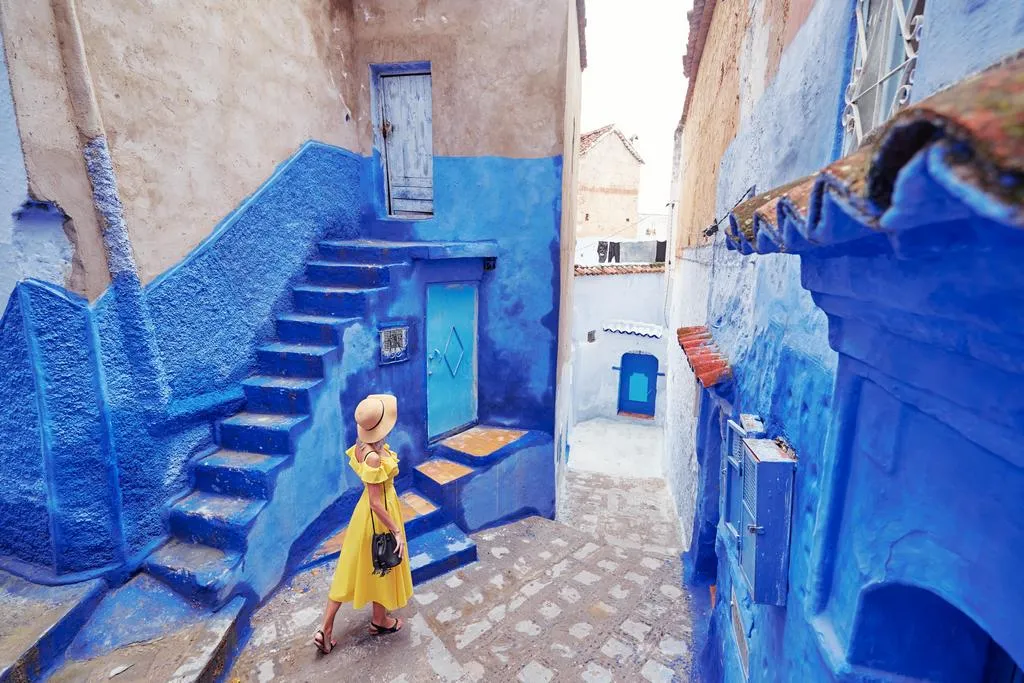
Chefchaouen is very different from Marrakech. Instead of the red city in the plain, you find a small town on the slopes of the Rif, with blue and white houses, cool mountain air and a slow rhythm. Founded in the fifteenth century, it welcomed Andalusian Muslims and Jews after the Reconquista, and its architecture still shows that heritage. Today it is one of the most photogenic towns in the country.
The journey itself is also part of the experience: you see Casablanca and its Hassan II Mosque, the royal capital Rabat, the green countryside of the north and the mountains of the Rif. For travellers who also want to visit Fes, Chefchaouen fits naturally into a north-south loop.
Day 1: Marrakech to Rabat via Casablanca
Your driver picks you up early in the morning in Marrakech and takes the motorway north. After about three hours, you arrive in Casablanca. Your first stop is the Hassan II Mosque, built above the Atlantic Ocean, with one of the tallest minarets in the world. Non-Muslim visitors can join the official guided tour of the interior, outside prayer times.
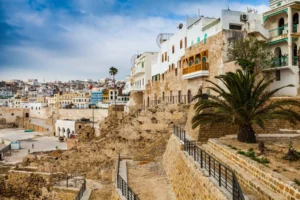
After lunch by the sea, you continue to Rabat, the capital of Morocco, about one hour further. Visit the Kasbah of the Udayas, with its white and blue lanes above the river mouth, the Hassan Tower and the Mausoleum of Mohammed V. Night in Rabat.
Alternative: if you prefer to arrive in Chefchaouen on the first evening, we can drive directly, with short stops only. It is a long day of 7 to 8 hours on the road, so we recommend the version with a night in Rabat.
Day 2: Rabat to Chefchaouen
In the morning, you leave Rabat and drive north through farmland and forests. Gradually, the landscape becomes greener and more mountainous as you enter the Rif. You arrive in Chefchaouen around midday.
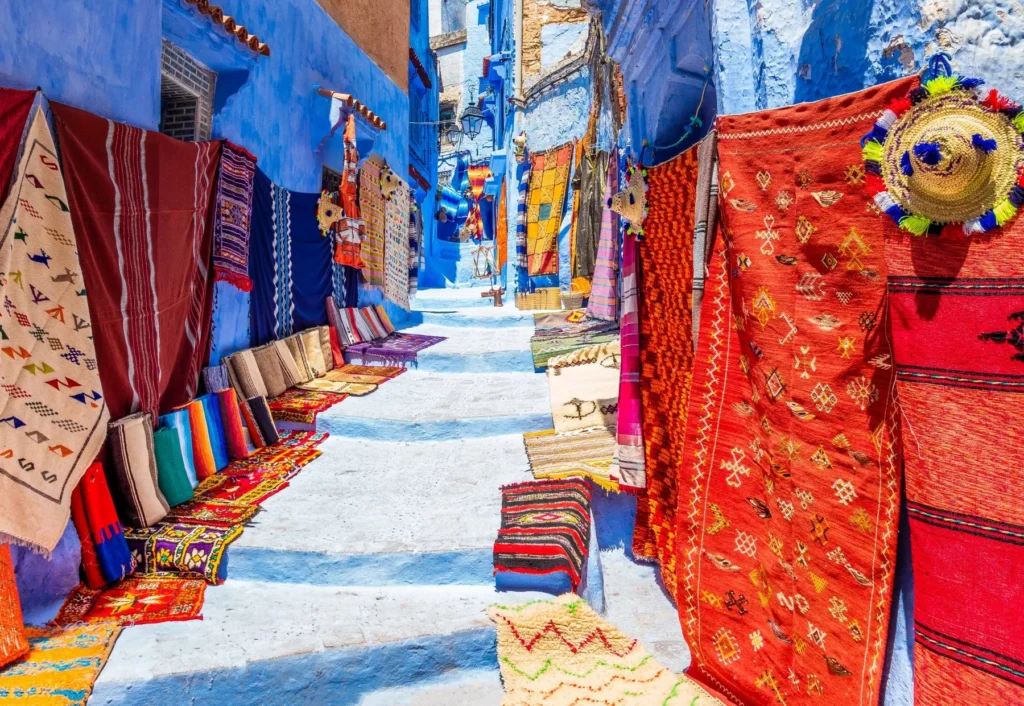
In the afternoon, you explore the medina on foot. Walk through the blue alleys, visit the square of Outa el Hammam with the Grand Mosque and the old kasbah, whose garden and small museum offer a pleasant break. Continue to Ras el Maa, the spring at the edge of the medina, where locals come to collect water and do their washing. Before sunset, take the path up to the Spanish Mosque on the hill opposite the town: the view over Chefchaouen at the end of the day is one of the most beautiful in Morocco. Night in a riad or guesthouse in Chefchaouen.
Day 3: Chefchaouen to Fes (or Akchour)
Enjoy a calm morning in Chefchaouen, when the lanes are quiet and the light is soft for photography. Then you have several options:
- Continue to Fes: the road takes about four hours. On the way, you can stop at the Roman ruins of Volubilis and the imperial city of Meknes if you start early, or keep them for another day.
- Go to Akchour: about an hour from Chefchaouen, the Akchour valley is known for its waterfalls and the natural rock arch called God’s Bridge. It makes a lovely half-day walk in spring and summer, before continuing to Fes.
- Return to Marrakech: possible, but it is a very long drive. We recommend breaking the journey with a night on the way.
If you finish in Fes, you can explore its medina, the largest in Morocco, with our private guided tour of the Fes medina, then continue to the Sahara with one of our tours from Fes.
Turn it into a complete loop
Chefchaouen is often the northern stage of a longer trip. Here are some popular combinations:
- 5 to 7 days: Marrakech, Rabat, Chefchaouen, Fes, then the Sahara and back to Marrakech through the Dades Valley and Ait Ben Haddou.
- Imperial cities: Marrakech, Casablanca, Rabat, Chefchaouen, Fes and Meknes.
- Start in Tangier: if you arrive by ferry from Spain, Chefchaouen is only about two hours from Tangier. See our Chefchaouen day trip from Tangier.
Tell us how many days you have and we will suggest the most comfortable route.
Best time to visit Chefchaouen
- March to June: green mountains, mild temperatures and flowers in the lanes. The best season overall.
- July and August: warm but fresher than Marrakech, thanks to the altitude. Busy with Moroccan and international visitors, so book early.
- September to November: pleasant and calmer, with good light for photography.
- December to February: cold and rainy at times, with snow possible on the surrounding peaks. Many riads have heating, but bring warm clothes.
Where to stay in Chefchaouen
Most visitors stay in small riads and guesthouses inside the medina, often with rooftop terraces overlooking the blue houses and the mountains. The medina is pedestrian, so your driver parks at the edge and helps you reach your accommodation. We suggest options according to your budget when we prepare your quote.
Why travel with a private driver?
- No need to organise trains, buses and taxis between several cities.
- Pickup at your accommodation and help with luggage.
- The freedom to stop in Casablanca, Rabat, Volubilis or Akchour as you wish.
- An English-speaking driver who knows the roads of the north and the Rif.
- A route adapted to your rhythm, your interests and your flights.
What is included
- Private air-conditioned vehicle with an English-speaking driver for the whole trip.
- Fuel, tolls and parking.
- Pickup in Marrakech and drop-off at your chosen destination.
- Help with booking accommodation and local guides on request.
Accommodation, meals, entrance fees and local guides can be included or not, according to your wishes. The price depends on the number of travellers, the season and your choices. We send a free, detailed quote with no obligation.
Practical tips
- Walking: Chefchaouen is built on a slope with many steps; comfortable shoes are essential.
- Photography: the town is very photogenic, but residents live in these houses. Be discreet and always ask before photographing people.
- Cash: there are ATMs in Chefchaouen, but small shops often prefer cash.
- Clothing: the north is more conservative in rural areas; dress modestly.
- Evenings: even in summer, nights can be cool in the mountains.
Why is Chefchaouen blue?
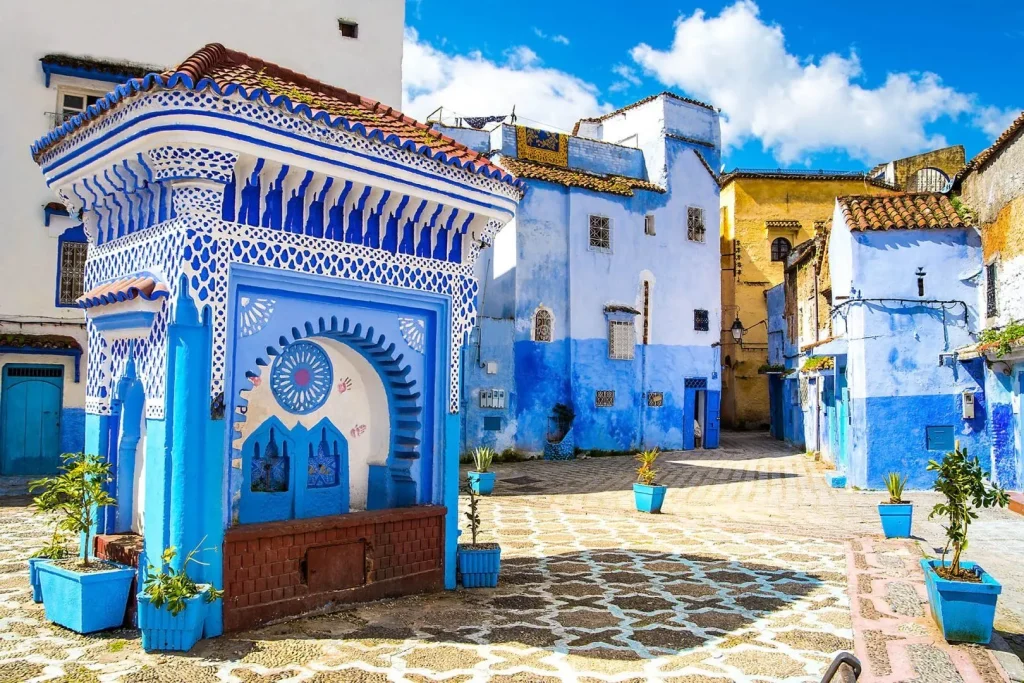
Nobody knows for sure why the houses of Chefchaouen are painted blue, and locals give several explanations. Some say the tradition came from Jewish families who settled in the town and associated blue with the sky and the divine. Others say the colour keeps the houses cooler in summer or keeps mosquitoes away. Many also point out that the blue became more widespread in recent decades, as the town became famous with visitors and photographers. Whatever the origin, residents still repaint the walls regularly, often in spring, which keeps the colours bright.
What to eat in Chefchaouen
The cuisine of the north is a little different from that of Marrakech. Try the local goat cheese, often served fresh with olive oil and bread, and the tagines and soups of the Rif. Many small restaurants around Outa el Hammam square serve traditional dishes at reasonable prices, and the rooftop terraces of the medina are pleasant places for a mint tea with a view. Fresh bread and pastries from the neighbourhood ovens are another simple pleasure of a morning walk in the lanes.
The region is also known for its crafts: woven blankets, wool clothing and leather goods. In the medina, you can watch artisans at work and buy directly from their small workshops.
Frequently asked questions
Can I do a day trip from Marrakech to Chefchaouen?
No. The distance is too great for a single day. You need at least 2 days, and 3 days for a comfortable trip.
How long is the drive from Marrakech to Chefchaouen?
Around 7 to 8 hours of driving without long stops, which is why we break the journey in Rabat or Casablanca.
Is it better to go from Fes?
From Fes, Chefchaouen is about four hours away, so it is easier to visit from there. If your trip includes Fes, combine both cities. See our Chefchaouen day trip from Fes.
Can we include the desert?
Yes. A 6 to 8-day loop can include Chefchaouen, Fes, the dunes of Merzouga and the return to Marrakech.
Book your private Marrakech to Chefchaouen tour
Send us your dates, the number of travellers and where you want to finish your trip. Our local team will reply with a free, tailor-made itinerary and quote. You can also browse all our private tours from Marrakech.