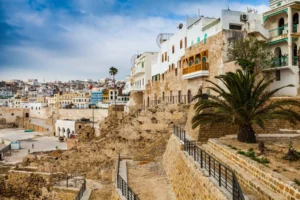
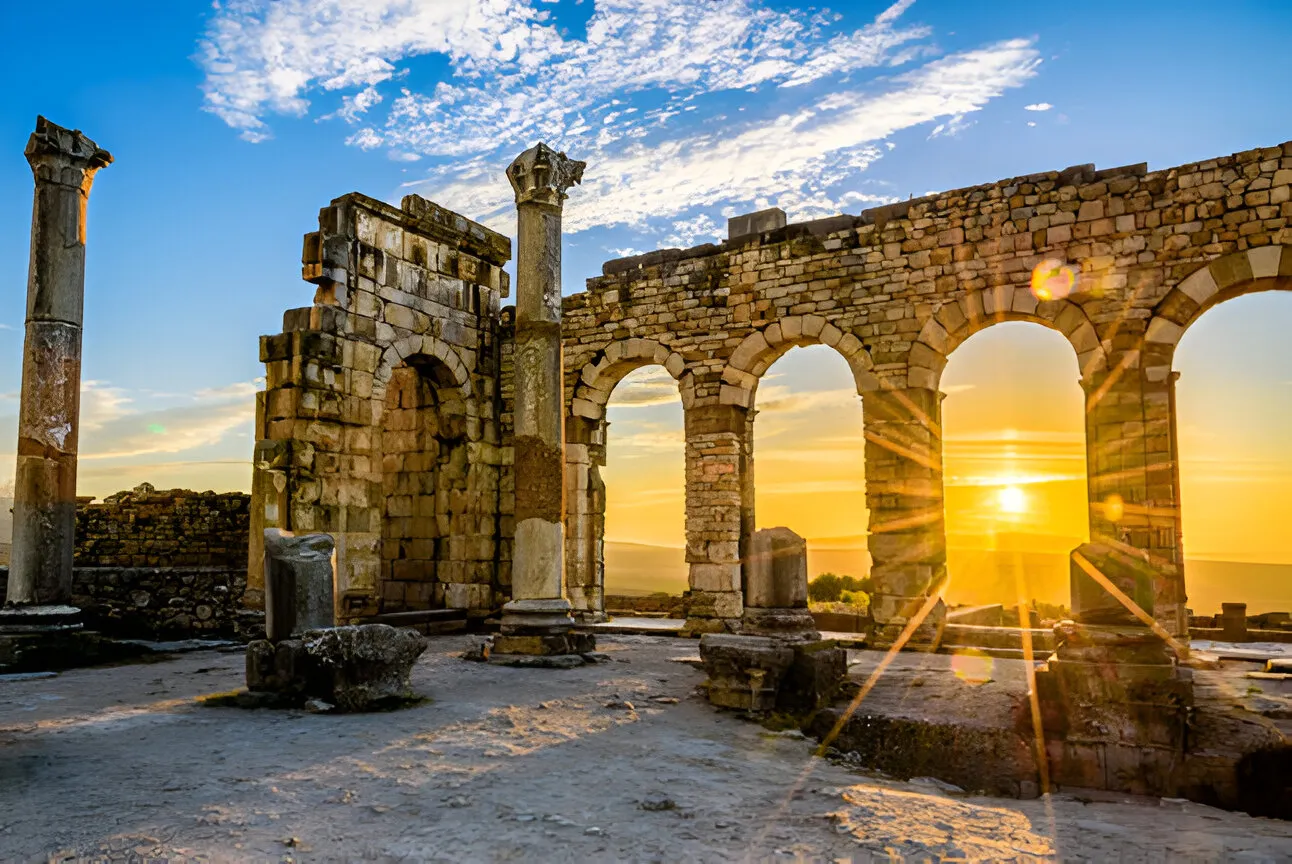
If you stay in Fes for a few days, the most popular excursion from the city is a day trip to Meknes, Volubilis and Moulay Idriss. In one day you discover the best-preserved Roman ruins in Morocco, the sacred hill town where the first Moroccan dynasty was founded, and the imperial city of Sultan Moulay Ismail, with its monumental gates and granaries. It is a journey through more than two thousand years of history, only a short drive from Fes.
This article presents our private Volubilis and Meknes day trip from Fes. You travel in your own air-conditioned vehicle with an English-speaking driver, starting from your riad or hotel. Below you will find the itinerary, what to see at each stop, the best time to go and practical tips.
The day trip at a glance
- Duration: full day, around 8 to 9 hours.
- Distances: Fes to Meknes about 60 km; Meknes to Volubilis about 30 km. Short drives between each stop.
- Pickup: from your riad or hotel in Fes.
- Main stops: Roman city of Volubilis, Moulay Idriss Zerhoun, imperial city of Meknes.
- Type: private tour, flexible itinerary.
- Option: licensed local guides at Volubilis and in Meknes, on request.
Why is this one of the best day trips from Fes?
- Short driving times: the three sites are close to each other, so you spend most of the day visiting, not driving.
- Two UNESCO World Heritage sites: both Volubilis and the historic city of Meknes are listed by UNESCO.
- A change of atmosphere: after the dense medina of Fes, you enjoy open countryside, olive groves and wide views.
- Something for everyone: Roman archaeology, Islamic history, imperial architecture and local markets.
Itinerary of the day
Morning: Volubilis, the Roman city
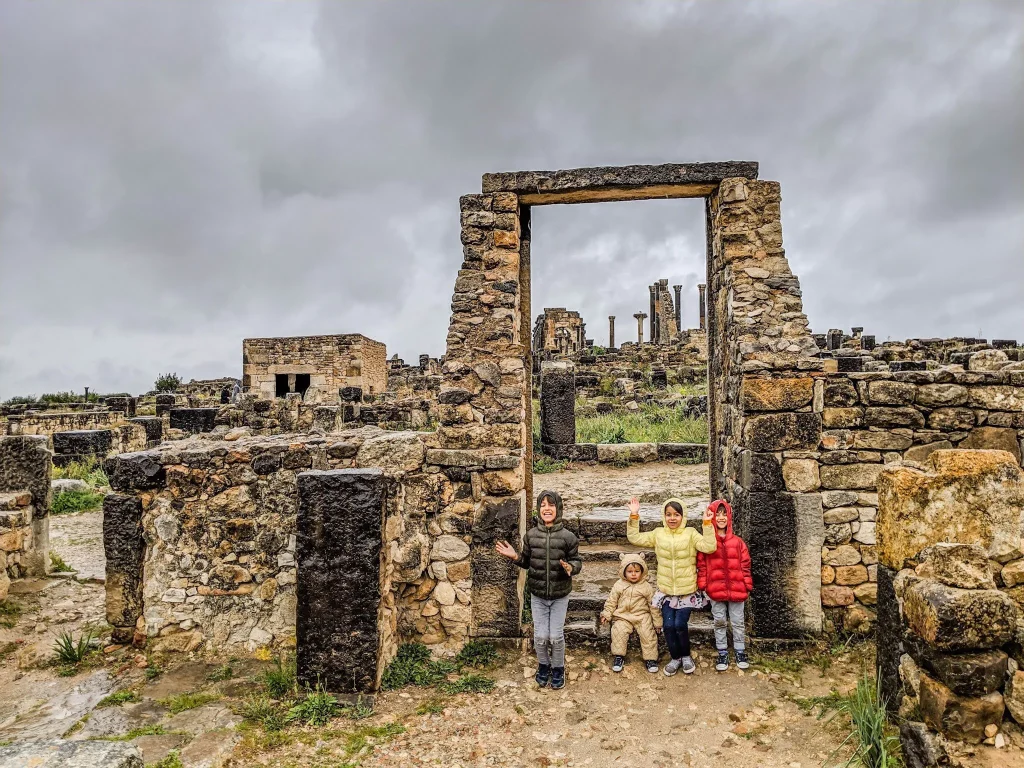
Your driver picks you up in Fes after breakfast. The road crosses fertile farmland and olive groves towards the Zerhoun massif. After a little over an hour, you reach Volubilis, set on a plateau with a beautiful view of the surrounding plain.
Volubilis was an important city of the Roman province of Mauretania Tingitana, and its origins are even older. The site is famous for its mosaics, many of them still in place in the floors of the rich houses: scenes of mythology, animals and gods that keep their colours after almost two thousand years. You also walk along the main street, the Decumanus Maximus, see the remains of the basilica, the capitol and the triumphal arch dedicated to the emperor Caracalla, and the ruins of oil presses that recall the city’s olive oil trade.
The site is open-air and has little shade, so the morning is the best time to visit. A licensed guide brings the ruins to life; you can hire one at the entrance or ask us to arrange one in advance.
Midday: Moulay Idriss Zerhoun
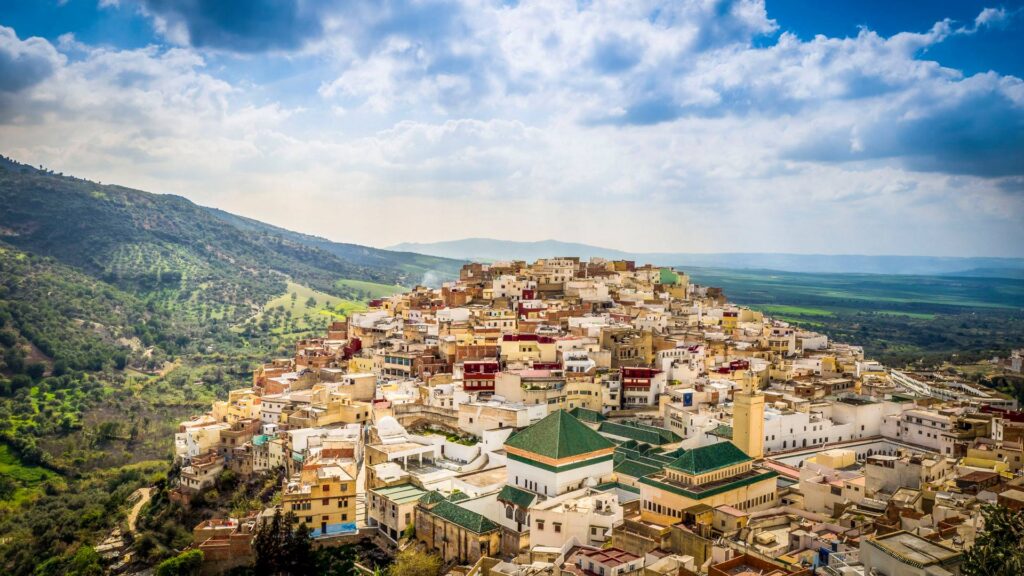
A few kilometres from Volubilis, the white town of Moulay Idriss Zerhoun spreads over two hills. It is one of the holiest places in Morocco: here is the tomb of Moulay Idriss I, who arrived in the eighth century and founded the first Moroccan dynasty. The mausoleum itself is reserved for Muslims, but you can walk in the lanes of the town and climb to a viewpoint for a magnificent panorama over the white houses and the green countryside.
Moulay Idriss is also a good place for lunch. Small local restaurants serve simple Moroccan dishes, and the town is known for its sandwiches of grilled meat and its calm, authentic atmosphere.
Afternoon: Meknes, the imperial city
In the afternoon, you drive to Meknes, one of Morocco’s four imperial cities. In the late seventeenth and early eighteenth centuries, Sultan Moulay Ismail made it his capital and built a city of huge walls, gates, palaces and stables.
The highlight is Bab Mansour, one of the most beautiful monumental gates in Morocco, decorated with zellige tiles and marble columns. It faces Place El Hedim, the main square, where you can watch daily life and visit the covered food market nearby.
Depending on opening times and restoration works, you can also visit the mausoleum of Moulay Ismail, the Heri es-Souani granaries and stables, impressive vaulted buildings designed to store grain and feed thousands of horses, and the Agdal basin next to them. A short walk in the medina, quieter than the one in Fes, completes the visit. In the late afternoon, you drive back to Fes, about one hour away.
Variation: ending in Chefchaouen or continuing south
This day trip also works very well as a stage of a longer journey. Many travellers visit Volubilis and Meknes on the way between Fes and Chefchaouen, Rabat or Tangier. Others add it at the start of a desert trip from Fes. Tell us your plans and we will include it in your itinerary. For other ideas, see our Chefchaouen day trip from Fes and all our tours from Fes.
Best time to visit Volubilis and Meknes
- March to May: the best period. The countryside is green, often covered in wild flowers, and the temperatures are perfect for walking in the ruins.
- June to August: hot, especially at Volubilis, which has little shade. Start early, bring a hat and plenty of water.
- September to November: pleasant and less crowded, with beautiful light over the olive groves.
- December to February: cooler and sometimes rainy, but often clear and very quiet.
Practical tips
- Sun protection: hat, sunscreen and water are essential at Volubilis.
- Shoes: wear comfortable shoes; the Roman streets are uneven.
- Dress code: Moulay Idriss is a holy town; dress modestly, with shoulders and knees covered.
- Tickets: entrance fees to Volubilis and to the monuments in Meknes are paid on site.
- Cash: bring dirhams for tickets, guides and small restaurants.
- Friday: some monuments may close at midday; we adapt the order of visits.
Why choose a private tour?
Public transport between Fes, Meknes and Volubilis is possible, but combining the three sites in one day is difficult without a car. Grand taxis are often shared and do not wait for you at the site. With a private driver:
- You are picked up at your riad and dropped back in the evening.
- You decide how long to stay at each place.
- You can visit Volubilis early, before the heat and the groups.
- Your driver can recommend good local places for lunch.
- You can easily add a guide, a wine tasting near Meknes, or extra stops.
What is included
- Private air-conditioned vehicle with an English-speaking driver.
- Pickup and drop-off at your accommodation in Fes.
- Fuel and all transport costs for the day.
Entrance fees, guides at the sites, lunch and personal expenses are usually not included, but we can arrange guides in advance. We confirm everything in your free, detailed quote.
A short history of the region
The area between Fes and Meknes has been at the centre of Moroccan history for more than two thousand years. Long before the Romans, Amazigh kingdoms ruled the region, and Volubilis was already an important town. Under Roman rule, from the first century, it became one of the main cities of the province of Mauretania Tingitana, rich thanks to its wheat and olive oil. The Romans left the region at the end of the third century, but the city remained inhabited for centuries, with a Latin-speaking and later Christian community.
At the end of the eighth century, Moulay Idriss I, a descendant of the Prophet, arrived in the region. He was welcomed by local tribes, settled near Volubilis and founded the first Moroccan Islamic dynasty, the Idrissids. His son, Moulay Idriss II, then developed the city of Fes. This is why Moulay Idriss Zerhoun is still a major place of pilgrimage today.
Many centuries later, in the late seventeenth century, Sultan Moulay Ismail of the Alaouite dynasty, the dynasty that still reigns in Morocco, chose Meknes as his capital. He built kilometres of walls, monumental gates, palaces and enormous granaries and stables. Some materials used for these constructions were taken from the ruins of Volubilis. The great earthquake of 1755 later damaged both sites. Visiting the three places in one day therefore lets you follow the story of Morocco from Antiquity to the modern kingdom.
What to eat on the way
The region of Meknes is one of the agricultural heartlands of Morocco. It is famous for its olives and olive oil, which you see everywhere along the road, and it is also one of the main wine-producing areas of the country. In Moulay Idriss, try the simple local grills and sandwiches. In Meknes, the food market near Place El Hedim is a colourful place to taste olives, dried fruit and Moroccan pastries. Your driver can recommend good, simple places for lunch according to your tastes.
Frequently asked questions
How long do you need at Volubilis?
Most visitors spend 1.5 to 2 hours on the site. With a guide and an interest in archaeology, you can easily stay longer.
Can we do this trip from Marrakech?
Not as a day trip: Fes is too far. However, Volubilis and Meknes can be included in a multi-day tour, for example on the way from Marrakech to Fes via Casablanca and Rabat, or in our desert tours ending in Fes such as the 3-day desert tour from Marrakech to Fes.
Is this tour suitable for children?
Yes. Children often love exploring the Roman ruins and spotting the mosaics. Avoid the hottest hours in summer.
Should we take a guide?
We recommend it at Volubilis, because there are few explanation panels. In Meknes, a guide helps you understand the history of Moulay Ismail’s city.
Book your private Volubilis and Meknes day trip
Send us your date, the number of travellers and where you are staying in Fes. Our local team will reply with a free, tailor-made quote. If you also want to discover the medina of Fes with an expert, see our private guided tour of the Fes medina.