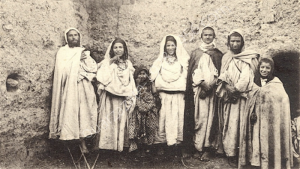

A Marrakech private Jewish heritage tour leads you into the Mellah, the old Jewish quarter of the Red City, between the Bahia Palace and the Badi Palace. For more than four centuries thousands of Jewish families lived, prayed and traded here. Today the community is very small, but synagogues, the great cemetery and the streets of the Mellah keep its memory alive. With a private guide you can visit at your own pace and understand the stories behind each place.
A short history of the Mellah of Marrakech
The Mellah of Marrakech was created in the 16th century under the Saadian dynasty, next to the royal kasbah. Jewish merchants, jewellers, tailors and bankers played an important role in the city’s trade, including the caravan routes to the Sahara. Many families left Marrakech in the second half of the 20th century. The quarter was renamed for some decades, and in 2017 its historic street names, including the name Mellah, were restored by royal decision as part of the protection of Morocco’s Jewish heritage.

What you see on the tour
The Lazama synagogue
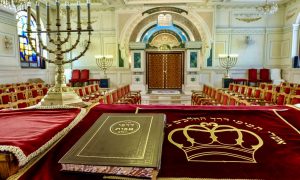
The Slat al Azama, or Lazama synagogue, is the best-known synagogue of the Mellah. Its history is linked to Jews who came to Morocco after the expulsion from Spain in 1492. The building opens onto a courtyard decorated with blue and white tiles, and a small exhibition with photographs tells the story of the community.
The streets of the Mellah
Walk through the covered market, the narrow lanes and the small squares of the quarter. Look for the six-pointed stars on old doors and the outward-facing windows and balconies, typical of Mellah houses. Your guide explains which houses belonged to well-known families and where workshops once stood.
The Miaara Jewish cemetery
The Miaara cemetery is one of the largest Jewish cemeteries in Morocco, with thousands of white tombs. Many rabbis and respected figures are buried here, and some graves are still visited in pilgrimage. A caretaker usually opens the cemetery for visitors.
Place des Ferblantiers and the spice market
At the edge of the Mellah, the Place des Ferblantiers is known for its metal lanterns, and the nearby market is famous for its spices. Many tinsmiths of this square were once Jewish craftsmen.

Bahia Palace and Badi Palace
Both palaces are next to the Mellah, so they fit naturally into the same walk. Read our guide to the Bahia Palace.
Jewish heritage outside Marrakech
The High Atlas and the south were once home to many rural Jewish communities. In the Ourika Valley, the shrine of Rabbi Shlomo Bel Hench attracts pilgrims during the annual hiloula. Further south, the kasbahs and villages of the Draa Valley and the Tafilalet also had Jewish quarters. A private driver can add these places to a day trip; see our Ourika Valley day trip.
Suggested half-day itinerary
- Start: pickup from your riad or hotel.
- Mellah: covered market, Lazama synagogue, old family houses.
- Miaara cemetery, then Place des Ferblantiers and the spice market.
- Optional: Bahia Palace or Badi Palace.
Practical tips
- Synagogue visits are not possible on Shabbat and Jewish holidays.
- Dress modestly; head coverings may be requested inside synagogues.
- A small entry fee or donation is usual at the synagogue and cemetery.
- Kosher meals are limited in Marrakech; tell us in advance and we will plan options.
Frequently asked questions
Why take a private Jewish heritage tour in Marrakech?
The Mellah is easy to get lost in, and many sites are opened by caretakers. A private guide knows the opening times, the families’ stories and the best route.
How long does the tour take?
About three hours for the Mellah, Lazama synagogue and Miaara cemetery; half a day with the palaces.
Can I continue to other Jewish heritage cities?
Yes. Many travellers combine Marrakech with Casablanca, Fes and Essaouira. See our Morocco Jewish heritage tours.
Book your private Jewish heritage tour in Marrakech
We are a local team based in Marrakech, and all our tours are private. Browse our private tours in Marrakech or contact us with your dates.