
Good preparation makes all the difference on a trek in Morocco. Whether you are walking in the High Atlas, in the volcanic Jbel Saghro or across the Sahara, temperatures can change quickly and conditions vary by season. This packing list covers the essentials.
Clothing
- Breathable base layers and long-sleeved tops for sun protection
- A warm fleece or insulated jacket for mornings, evenings and higher altitudes
- A windproof and waterproof outer layer
- Comfortable trekking trousers
- Sun hat, plus a warm hat and gloves in winter
- A scarf or buff against sun, wind and dust
Footwear
- Broken-in hiking boots or sturdy trail shoes
- Good trekking socks, plus spares
- Sandals or light shoes for the evening and for desert sand
Health and Personal Items
- Personal medication and a small first-aid kit
- Blister plasters
- Hand sanitiser and wet wipes
- Toilet paper and a small bag to carry rubbish out
Desert Treks: Extra Items
For walking in the Sahara, add light, loose clothing that covers your skin, a cheche (desert scarf), and a warm layer for cold desert nights. See our guide on what to wear in the Sahara.
Mountain Treks: Extra Items
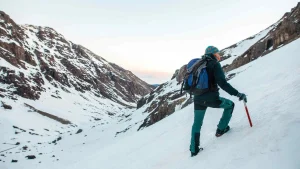
In winter and early spring, snow can cover high passes, and climbs such as Mount Toubkal may require crampons and an ice axe. Check conditions with your guide before you go.
Ready to Trek?
Discover our trekking tours in Morocco, including the Jbel Saghro trek and desert trekking, or start with the best day hikes near Marrakech.
Packing List by Season
| Season | Must-haves |
|---|---|
| Spring and autumn | Light layers, fleece, windproof jacket, sun hat |
| Summer | Sun protection, breathable clothes, 2–3 litres of water capacity |
| Winter | Warm down jacket, gloves, hat; crampons and ice axe for high peaks |
Essential Gear Checklist
- Broken-in hiking boots with good ankle support
- Daypack of 25–35 litres (mules carry the main bag)
- Sleeping bag for refuges and guesthouses
- Headlamp with spare batteries
- Sunglasses, sunscreen and lip balm
- Refillable water bottle or hydration bladder, and purification tablets
- Small first-aid kit and blister plasters
- Trekking poles for steep descents
- Cash in dirhams for drinks and tips
What You Do Not Need
On guided treks, you do not need tents, stoves or food for most routes, because guesthouses, refuges and mule teams provide them. Also, pack light: mules carry about 15 kg per traveller on many treks.
Treks to Use This List For
For example, the Toubkal trek 2 days, the Toubkal trek 3 days, the Atlas Mountains trek and the Jbel Saghro trek. Read our Toubkal climb guide.
How to Pack Your Bag for a Trek in Morocco
On most guided treks in Morocco, mules carry the main luggage between campsites or guesthouses, and you only carry a daypack. This changes how you pack. Put everything you need during the day in your daypack: water, snacks, sun cream, a warm layer, a rain jacket, your camera, a small first aid kit and tissues. Pack the rest in a soft duffel bag rather than a rigid suitcase, because it is easier to load on a mule. Keep your sleeping clothes and spare socks in a waterproof bag inside your main bag, so they stay dry even if it rains.
Weight matters too. Most trekking teams in the Atlas ask travellers to keep their main bag to a reasonable weight, often around 10 to 15 kilograms. Check with your organiser before you leave. If you are arriving from a longer trip in Morocco, you can usually leave extra luggage at your riad or hotel in Marrakech.
Layering: The Key to Trekking in the Atlas and the Sahara
Temperatures in Morocco change a lot between day and night, and between valleys and passes. A sunny morning in the valley can become a cold, windy afternoon on a pass at 3,000 metres. The best way to stay comfortable on a trek in Morocco is to dress in layers: a breathable base layer that dries quickly, a fleece or light down jacket for the evenings and high passes, and a waterproof, windproof jacket, essential in the mountains in every season. Light trekking trousers are ideal, with thermal leggings in winter.
In the Sahara, the same rule applies: light, long-sleeved clothes protect you from the sun during the day, and a warm jacket is needed for the cold desert nights, especially from November to March.
Renting or Buying Gear in Marrakech and Imlil
If you forgot something, you can buy basic trekking items in Marrakech, where several sports shops sell clothing, headlamps and water bottles. In Imlil, the starting point for Toubkal, small shops rent or sell winter equipment, sleeping bags and warm jackets, which is useful for winter ascents. Quality varies, so try the equipment before you leave and bring your own boots if possible: worn-in boots are the best protection against blisters.
Trekking Packing List for Toubkal
For the classic Toubkal climb, the packing list depends a lot on the season. From late spring to early autumn, standard trekking gear is enough, with a warm jacket and gloves for the summit morning, which is often very cold. In winter, from around December to March, snow and ice usually cover the upper slopes, and winter mountaineering equipment and experience on snow are needed. Your guide will tell you what is required for your dates. See our 2-day Toubkal trek and 3-day Toubkal trek for full details.
Water and Food on a Trek in Morocco
Drinking enough water is essential on every trek in Morocco, in the mountains as well as in the desert. Bring a reusable bottle of at least one and a half litres and water purification tablets or a filter bottle, as this reduces plastic waste in the mountains. On guided treks, the cook prepares breakfast, lunch and dinner, usually Moroccan salads, tagines, couscous, bread and mint tea. Bring a few energy snacks, such as nuts and dried fruit, for the longer climbs. Tell your organiser in advance about any dietary needs.
Frequently Asked Questions
Do mules carry the luggage?
On many treks, mules or camels carry the main luggage, so you only carry a daypack. Check the details of your itinerary.
What is the best season for trekking?
Spring and autumn for most routes. Summer is too hot for desert trekking, and winter is cold in the mountains.
Related private tours